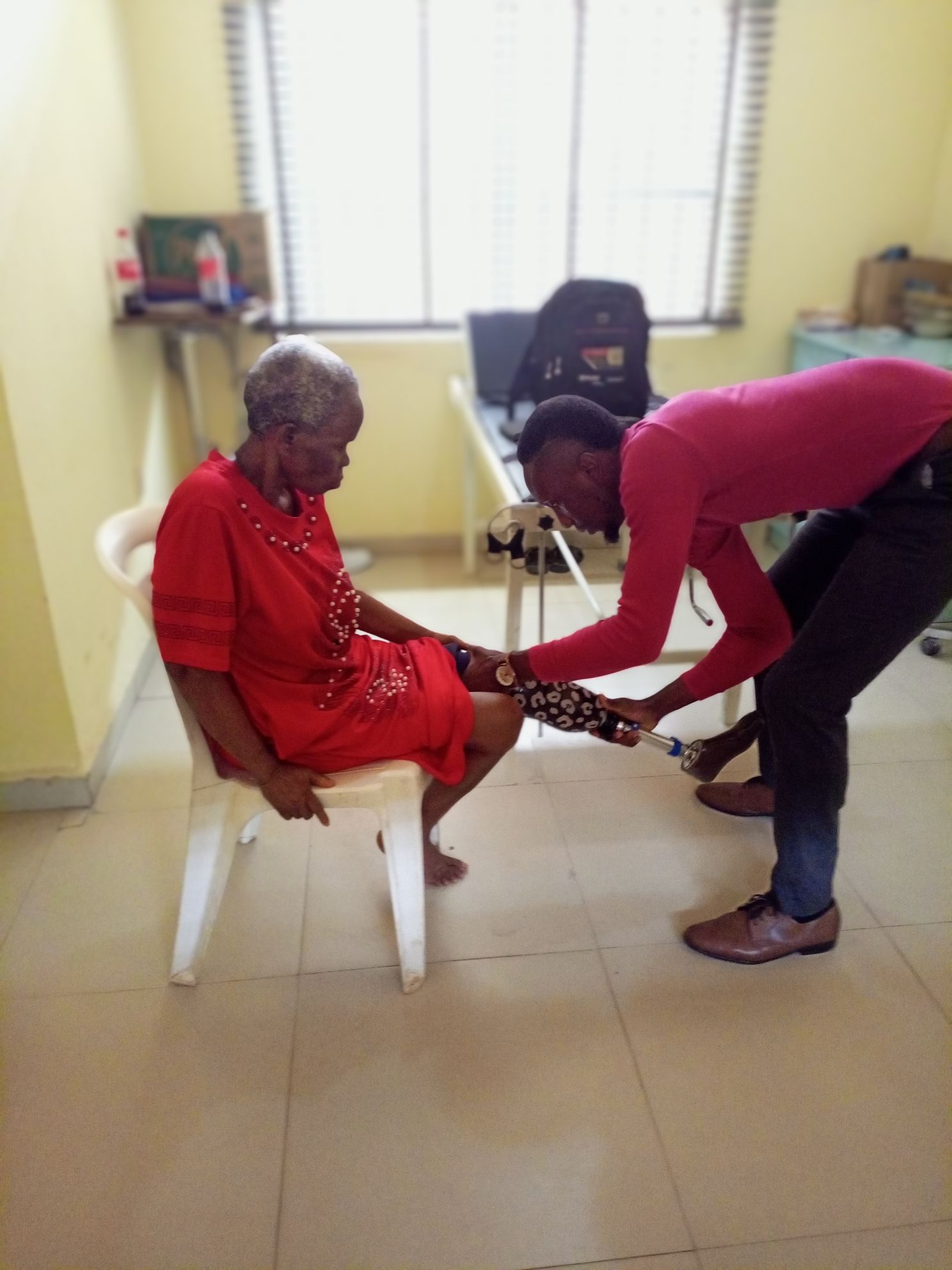
Receiving a high-technology carbon-fibre prosthesis is only half the journey. The other half is learning to trust, align, and balance your body upon it through systematic gait retraining.
Without proper gait training, new amputees frequently develop compensatory habits, such as hiking the hip on the sound side, vaulting, or avoiding weight transfer onto the prosthetic side. Over time, these asymmetric walking patterns create severe lower-back strain, premature sound-limb osteoarthritis, and unnatural socket abrasion.
The Four Pillars of Clinical Gait Rehabilitation at HMRC:
- 1. Static Balance & Bilateral Weight Shift: Before taking the first stride, we train patients on parallel bars to distribute 50% of their body weight onto the prosthetic socket. Trusting the prosthetic side allows the sound limb to swing freely without hesitation.
- 2. Stride Symmetry & Step Length Matching: Many amputees take a short, hurried step on their prosthesis and a long step on their natural limb. We use visual floor markers and mirror biofeedback to synchronize step cadence and length.
- 3. Pelvic & Core Muscle Stabilization: Strengthening the gluteus medius, abdominal core, and hip abductors eliminates Trendelenburg gait (pelvic drop) and provides upright postural stability over uneven Nigerian surfaces.
- 4. Real-World Terrain Adaptation: We transition patients from indoor level floors to ramps, curbs, outdoor steps, and grass, fine-tuning foot deflection and hydraulic knee resistance for effortless navigation.
"Gait training transforms a mechanical device into a seamless extension of your body. Our goal is to see you walk into your workplace or community with balance, fluidity, and unshakeable confidence."
Protecting Your Device and Sound Limb
When weight distribution is balanced, the mechanical modular components of your prosthesis experience even stress cycles, preventing premature joint wear. More importantly, your sound knee and hip joints are spared from chronic overload.