The Moment
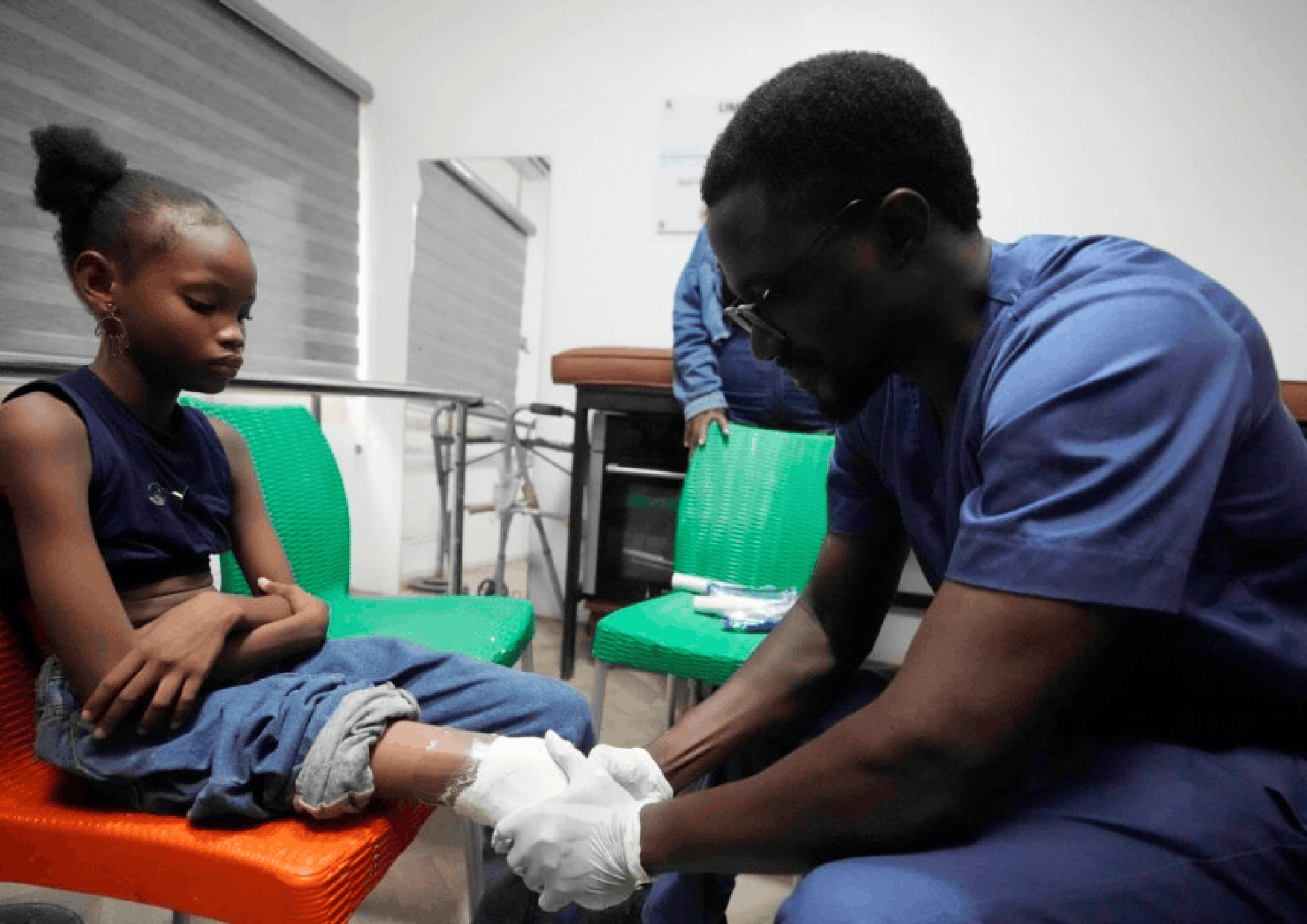
An image of trust, precision, and hope: Twelve-year-old Chinenye sits comfortably in the clinic as our Prosthetist gently wraps wet plaster of Paris bandages. This is the cast impression stage, the foundational moment where clinical science meets personalized care.
Behind the Lens: The Clinical Workflow
Creating a life-changing prosthesis requires an exact, three-dimensional replica of the patient’s anatomy. The process captured here highlights the critical steps taken by the Prosthetist:
Anatomical Mapping
Before the first bandage touches the skin, the clinician palpates the limb to identify bony landmarks, pressure-sensitive areas, and tolerant zones.
Tissue Manipulation
As the plaster sets, the Prosthetist uses precise hand placements to capture the contours of the underlying muscle and tissue under light tension, ensuring the final socket will fit securely without slipping.
Distraction & Comfort
For young pediatric patients, a calm environment is vital. Our team turns the casting process into an engaging, painless activity, ensuring the child remains still and relaxed for an accurate mold.
From Plaster to Progress
Once the plaster hardens in just a few minutes, it is gently removed. This negative mold is filled with liquid plaster to create a positive model of Chinenye’s limb.
Our technicians then modify the model, rectifying the shape to relieve pressure on sensitive spots and optimize load-bearing areas. The final result will be a custom-fabricated, lightweight socket designed specifically to support Chinenye’s active, growing lifestyle.
A prosthesis is only as good as its fit. By combining advanced biomechanical principles with a compassionate, child-centric approach, our clinicians ensure that the very first step of the journey sets the patient up for long-term comfort, mobility, and confidence.